
TL;DR
Choosing the right digital marketing strategy isn’t about being active on every platform, it’s about understanding your business goals, target audience, budget, and where your customers are most likely to convert. In our 6+ years of experience working with over 100 businesses and managing more than ₹10M in advertising spend, we’ve found that businesses that invest in the right channels consistently outperform those trying to do everything at once.
If you’ve ever searched for ways to grow your business online, you’ve probably come across hundreds of marketing strategies.
“Start posting on Instagram.”
“Run Facebook Ads.”
“Invest in SEO.”
“Use AI.”
“Start Google Ads.”
While all of these strategies can work, none of them are automatically the right strategy for your business.
One of the biggest mistakes business owners make is choosing a marketing channel simply because it’s trending or because a competitor is using it.
After working with 100+ businesses across industries, we’ve learned one thing:
The best digital marketing strategy is the one that matches your business goals, not someone else’s.
This guide will help you understand how to choose the right strategy based on your business, budget, and growth objectives.
Why Choosing the Right Strategy Matters
Digital marketing isn’t about doing everything.
It’s about doing the right things first.
We’ve seen businesses spend lakhs on social media without generating quality leads, while others doubled their enquiries simply by investing in SEO and Google Ads.
The difference wasn’t the budget.
It was the strategy.
The Biggest Mistakes Businesses Make
Here are the most common mistakes we see business owners make before they approach us.
1. Focusing Only on Social Media
Many businesses believe that posting daily on Instagram or Facebook is enough.
The reality?
If your customers are actively searching for your services on Google, social media alone won’t generate consistent leads.
Social media builds awareness.
Google captures buying intent.
Both have different roles.
2. Expecting Instant Results from Every Channel
One of the biggest misconceptions is expecting SEO to rank a website in a few weeks.
SEO starts creating improvements from day one through technical fixes, content optimisation, and better website structure. However, meaningful organic growth usually takes 3–6 months, depending on competition.
Google Ads, on the other hand, can start generating leads immediately once campaigns are properly set up.
Understanding these timelines helps businesses set realistic expectations.
3. Choosing Platforms Without Understanding Customer Intent
Not every business should advertise on every platform.
For example:
- A plumbing company may benefit more from Google Ads because customers search when they need urgent help.
- A fashion brand may achieve better results by combining Meta Ads with influencer marketing.
- A B2B software company may rely heavily on SEO and content marketing to generate qualified leads.
Your customers determine the platform, not trends.
Our Framework for Choosing the Right Marketing Strategy
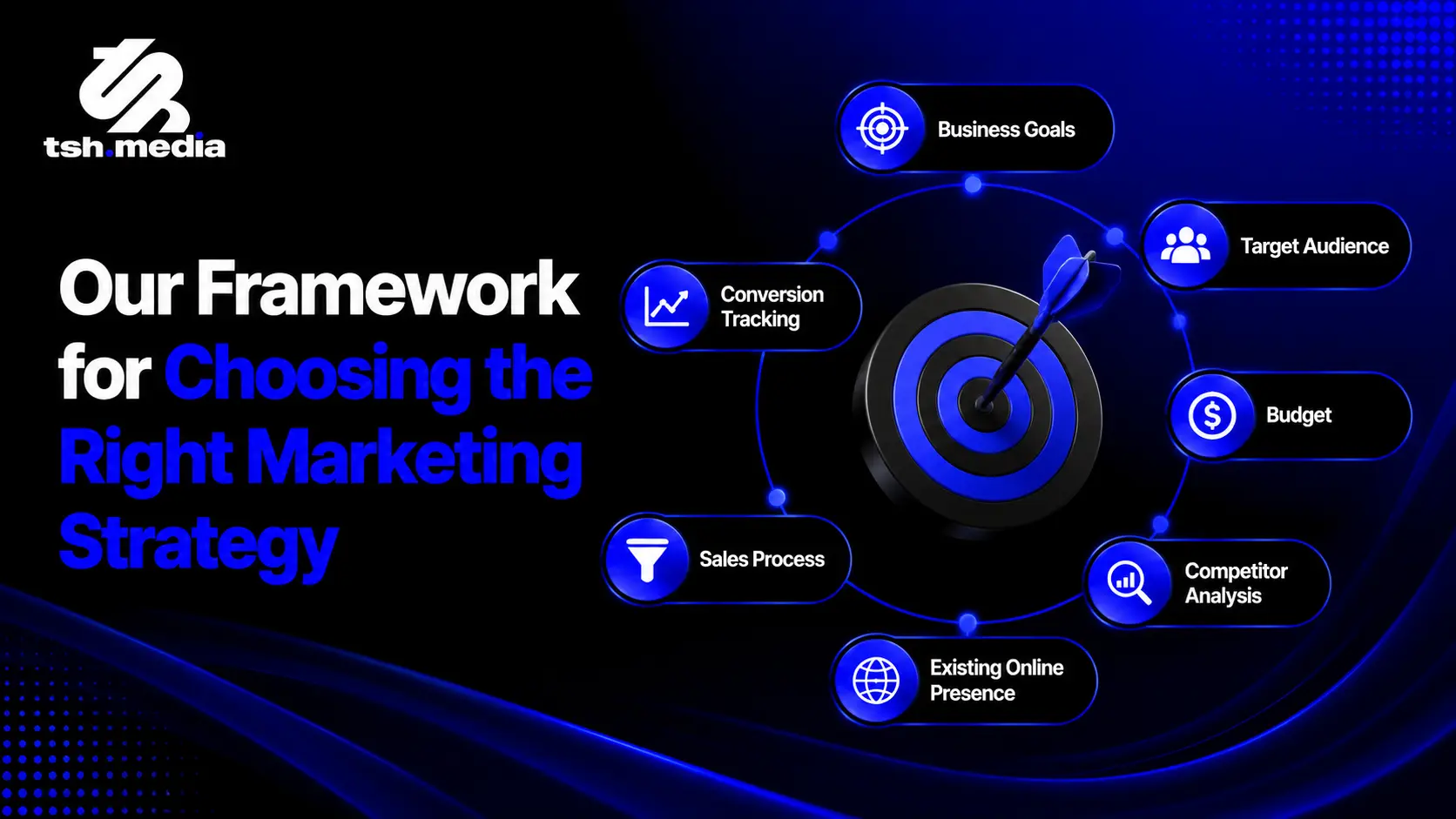
Before recommending any marketing strategy, we evaluate several factors.
Business Goals
Every strategy starts with one question:
What are you trying to achieve?
- More leads?
- More sales?
- Brand awareness?
- Website traffic?
- Local visibility?
Different goals require different marketing channels.
Target Audience
Understanding your audience helps determine:
- Where they spend their time
- How they search for products or services
- What influences their buying decisions
Marketing becomes significantly more effective when it’s built around customer behaviour.
Budget
Your budget determines which strategies can be implemented effectively.
As a general guideline:
|
Business Type |
Recommended Monthly Marketing Budget |
|
Local Business |
₹20,000–₹25,000 |
|
Service Business |
₹40,000–₹50,000 |
|
E-commerce Brand |
₹1,00,000+ |
A realistic budget allows campaigns to generate meaningful data and sustainable growth.
Competitor Analysis
We analyse:
- What competitors rank for
- Which keywords they target
- Their advertising strategies
- Their content performance
- Their social media presence
Learning from competitors helps identify opportunities and avoid unnecessary mistakes.
Existing Online Presence
Before recommending any strategy, we review:
- Website quality
- SEO health
- Social media performance
- Google Business Profile
- Existing advertising accounts
- Website traffic
- Conversion rates
A strategy should build on what’s already working rather than starting from scratch unnecessarily.
Sales Process
Marketing doesn’t stop when someone becomes a lead.
We also analyse:
- How enquiries are handled
- Follow-up process
- CRM usage
- Sales team performance
Many businesses don’t have a marketing problem.
They have a sales process problem.
Conversion Tracking
Without proper tracking, marketing becomes guesswork.
We ensure businesses measure:
- Phone calls
- Contact forms
- WhatsApp enquiries
- Purchases
- Lead quality
- Cost per acquisition
- Return on ad spend
What gets measured gets improved.
Which Marketing Channel Should You Choose?
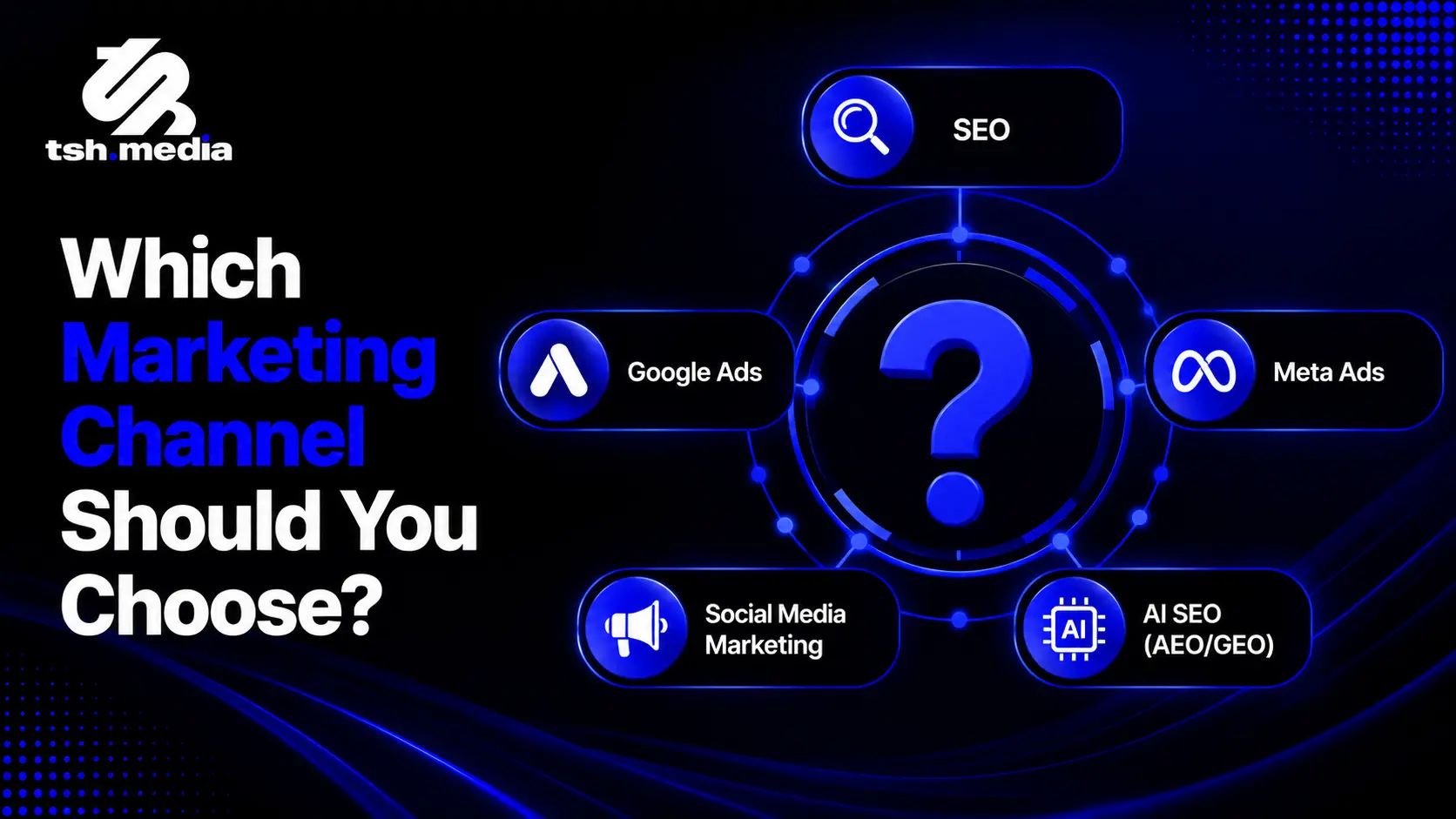
SEO
Ideal for:
- Local businesses
- Service providers
- B2B companies
- Businesses focused on long-term growth
Expected timeline:
3–6 months
Benefits:
- Sustainable traffic
- Higher trust
- Better visibility on Google
- Lower cost per lead over time
SEO is often underestimated because it requires patience, but it delivers lasting value when executed consistently.
Google Ads
Ideal for:
- Businesses needing immediate enquiries
- Local service providers
- High-intent searches
Expected timeline:
Immediate
Benefits:
- Instant visibility
- Fast lead generation
- Highly targeted traffic
- Measurable ROI
Google Ads work best when campaigns are backed by strong landing pages and conversion tracking.
Meta Ads
Ideal for:
- E-commerce brands
- Product launches
- Brand awareness
- Remarketing campaigns
Benefits:
- Audience targeting
- Visual storytelling
- Lead generation
- Retargeting potential
Meta Ads are powerful when customers aren’t actively searching but can be influenced through engaging content.
Social Media Marketing
Ideal for:
- Brand building
- Customer engagement
- Community growth
Expected timeline:
1–2 months for measurable engagement improvements, with stronger business outcomes developing over time.
Social media builds trust and keeps your brand visible, but it should support broader business goals rather than act as the only marketing channel.
AI SEO (AEO & GEO)
AI is changing how people discover businesses.
Today, customers increasingly rely on AI-powered search experiences before clicking traditional search results.
That means businesses should optimise for:
- AI Overviews
- Conversational search
- Structured content
- Entity optimisation
- Question-based content
- Helpful, experience-driven articles
AEO (Answer Engine Optimization) and GEO (Generative Engine Optimization) are becoming important extensions of traditional SEO, not replacements for it.
Real Results from Our Clients
Interior Design Business
Strategy
Google Ads + SEO
Results
- 120% increase in qualified leads
- Achieved within 6 months
Combining immediate lead generation with long-term organic growth created a balanced acquisition strategy.
E-commerce Brand
Strategy
Google Ads + Meta Ads
Results
- 200% increase in leads
- Achieved within 1 month
Paid advertising across search and social accelerated growth while providing valuable audience insights.
Service-Based Business
Strategy
SEO
Results
- 110% increase in leads
- Achieved within 6 months
A focused SEO strategy improved rankings for high-intent keywords and delivered consistent organic enquiries.
Common Warning Signs You're Choosing the Wrong Strategy
You may need to rethink your marketing approach if:
- You’re spending heavily on Meta Ads when customers primarily search on Google.
- You’re posting daily on social media but not measuring leads or conversions.
- You’re investing in paid ads without a professional website or dedicated landing pages.
- You’re focusing on vanity metrics like likes and followers instead of revenue.
- You’re making marketing decisions without data or conversion tracking.
Can AI Replace a Digital Marketing Agency?
This is one of the questions we hear most often.
Our answer is simple:
No.
AI is an incredible tool.
It can help with:
- Research
- Content ideas
- Copywriting
- Data analysis
- Workflow automation
However, AI cannot fully understand:
- Your business goals
- Customer psychology
- Budget allocation
- Market competition
- Strategic decision-making
- Campaign optimisation based on real-world performance
The businesses seeing the best results today are using AI to improve execution while relying on experienced professionals to guide strategy.
Final Thoughts
Digital marketing isn’t about doing more.
It’s about doing what’s right for your business.
The right strategy depends on your goals, your audience, your budget, and your ability to measure success.
In our experience of working with 100+ businesses, the companies that grow consistently are the ones that invest in strategy before tactics.
If you’re unsure where to start, don’t choose a platform because it’s popular.
Choose the one that aligns with how your customers actually search, engage, and buy.
A well-planned strategy will always outperform random marketing efforts.
Frequently Asked Questions
What is the best digital marketing strategy for beginners?
There isn’t a one-size-fits-all strategy. The best approach depends on your business goals, target audience, budget, and industry. Many businesses benefit from combining SEO, Google Ads, and social media rather than relying on a single channel.
A local business can start with a monthly budget of ₹20,000–₹25,000. Service-based businesses typically benefit from ₹40,000–₹50,000 per month, while e-commerce brands often require ₹1,00,000 or more to compete effectively.
Google Ads generally delivers the fastest results because it targets users actively searching for your products or services. SEO builds sustainable long-term growth but usually takes 3–6 months to show significant results.
Yes. SEO remains one of the most cost-effective long-term marketing investments. As AI-powered search evolves, businesses should expand their SEO strategy to include Answer Engine Optimization (AEO) and Generative Engine Optimization (GEO).
AI is an excellent tool for research, content creation, and automation, but it cannot replace strategic planning, campaign optimisation, or deep knowledge of your business and customers. The strongest results come from combining AI with experienced marketing professionals.